
When comparing two sounds, rooms, voices, or environments, choosing between quieter and more quiet can seem confusing. Both expressions communicate that something has less noise or activity than something else. However, they differ slightly in naturalness, rhythm, and typical usage. If you are writing an email, completing a school assignment, editing a blog post, or speaking in everyday American English, understanding the difference will help you choose the right expression. The good news is that you do not need to memorize a complicated rule. Once you understand how comparative adjectives work, choosing between these two forms becomes much easier.
Quick Answer: Quieter vs. More Quiet
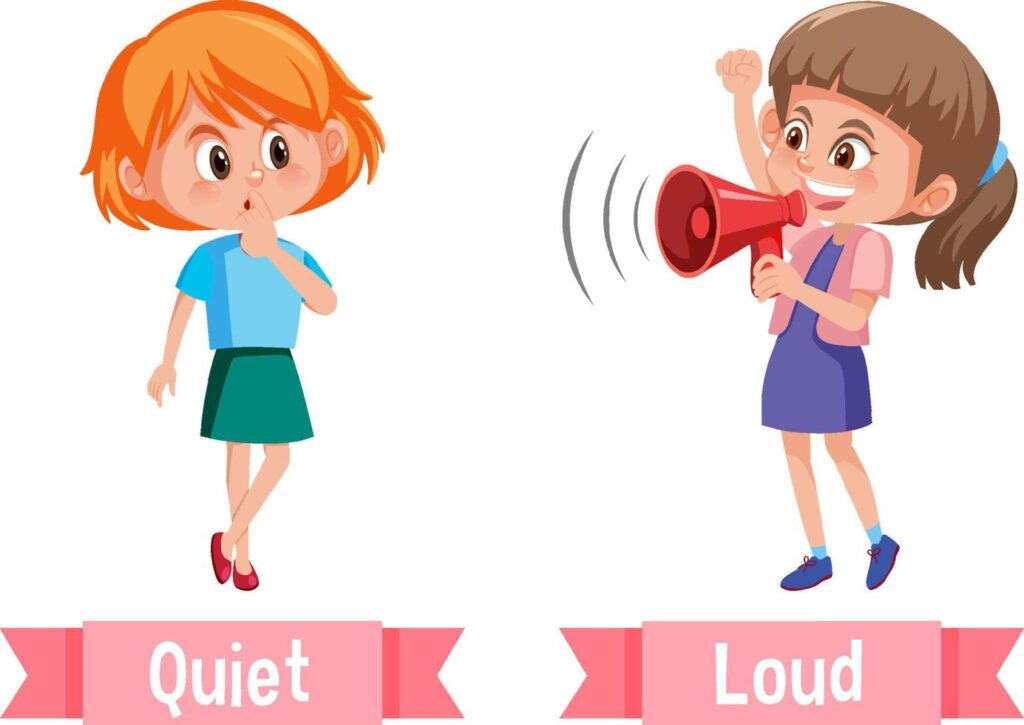
Both “quieter” and “more quiet” are grammatically correct. However, quieter is usually the preferred choice in everyday American English because it is shorter and more natural. Use more quiet when it better suits the sentence’s emphasis or rhythm. Avoid more quieter, which unnecessarily combines two comparative forms.
Key Takeaways
- Quieter is the usual, concise comparative form of quiet.
- More quiet is also grammatically acceptable, although it may sound more deliberate or emphatic in some contexts.
- Both expressions compare two people, places, sounds, or situations.
- Use quieter than or more quiet than when identifying a comparison.
- Never combine the two forms as more quieter in standard edited English.
- Use more quietly when describing how an action is performed, as in “Please speak more quietly.”
What Is the Difference Between Quieter and More Quiet?
The primary difference is the way each expression forms a comparative adjective. Quieter adds the suffix -er to quiet, while more quiet places the word more before the original adjective.
Both forms express a reduction in noise, activity, or disturbance relative to something else. The choice generally concerns style and natural phrasing rather than a difference in basic meaning.
Understanding the word quieter
Quieter is the comparative form of quiet. It describes something that produces less noise or has less activity than another thing.
For example, you might describe a library as quieter than a cafeteria or a bedroom as quieter than a living room. The word fits naturally into short, direct sentences.
Examples:
- This room is quieter than the kitchen.
- My new neighborhood is quieter at night.
- Could you find a quieter place to study?
The Oxford Advanced Learner’s Dictionary lists quieter as the comparative form of quiet. Oxford Learner’s Dictionaries
Understanding the phrase more quiet
More quiet uses more to create the comparative form. It is a valid alternative for this particular two-syllable adjective.
Examples:
- The room feels more quiet after everyone leaves.
- This setting makes the office more quiet and comfortable.
- The second passage sounds more quiet than the first.
These sentences are understandable and grammatically acceptable. Still, many writers would choose quieter in the same contexts because it is more concise.
The important point is that more quiet is not automatically incorrect simply because it does not use the -er ending. The Canadian government’s Language Portal specifically includes quiet among adjectives that can form comparatives in either way. Canada.ca
Is Quieter or More Quiet More Correct in American English?
Quieter is the best default for most American English writing. Both constructions are acceptable, but quieter often reads more smoothly in ordinary conversation, emails, schoolwork, and general web content.
The distinction is best understood through three practical considerations.
Everyday conversation
In casual conversation, shorter comparative forms are often straightforward and natural.
For example:
- Natural: “Can we move somewhere quieter?”
- Also correct: “Can we move somewhere more quiet?”
The first sentence is the better default for most everyday situations. The second can still work, depending on the speaker’s emphasis and the surrounding sentence.
Formal and professional writing
In professional writing, consistency and clarity matter more than forcing every adjective into one comparative pattern.
Consider these examples:
- “Please choose a quieter location for the meeting.”
- “The updated workspace provides a quieter environment.”
Both sentences are concise and suitable for professional communication.
You can use more quiet when it fits the intended meaning or cadence. However, there is rarely a need to choose it over quieter in straightforward business writing.
Creative and expressive writing
Writers sometimes choose more quiet because they want a particular rhythm or a deliberate contrast.
For example:
“The street became more quiet, more distant, and almost unfamiliar.”
Here, the repeated more creates a measured rhythm. A writer might prefer that effect to the shorter form, although quieter would also be grammatically possible.
This is a stylistic choice, not a special grammar rule.
Quieter vs. More Quiet: Comparison Table
The table below summarizes the main differences between the two forms.
| Feature | Quieter | More quiet |
|---|---|---|
| Grammatical status | Correct | Correct |
| Base adjective | Quiet | Quiet |
| Formation | Quiet + -er | More + quiet |
| Basic meaning | Less noisy or active | Less noisy or active |
| Everyday usage | Usually preferred | Acceptable alternative |
| Writing style | Concise and direct | Can sound more deliberate |
| Comparative example | This room is quieter than mine. | This room is more quiet than mine. |
| Superlative counterpart | Quietest | Most quiet |
The Cambridge Dictionary and the Canadian government’s Language Portal support the broader rule that some two-syllable adjectives accept both comparative constructions. Cambridge Grammar+1
How Do You Form the Comparative of Quiet?
The comparative of quiet can be formed in two ways: add -er to create quieter, or place more before the adjective to create more quiet.
Use these steps to choose a suitable form.
Step 1: Identify the adjective
First, determine whether quiet describes a person, place, object, sound, or situation.
Examples:
- a quiet room
- a quiet voice
- a quiet neighborhood
- a quiet evening
In each example, quiet describes a noun.
Step 2: Decide whether you need a comparison
Use a comparative form when one thing has less noise or activity than another.
For example:
- The bedroom is quieter than the living room.
- The bedroom is more quiet than the living room.
Both sentences compare two rooms.
Step 3: Choose the most natural construction
When you want a clear, direct sentence, choose quieter.
For example, instead of writing “The new classroom is more quiet than the old one,” you can write “The new classroom is quieter than the old one.”
The meaning remains the same, but the revised sentence is more concise.
Step 4: Add “than” when needed
Use than to introduce the second part of a comparison.
Correct examples:
- This street is quieter than the main road.
- My office is more quiet than the shared workspace.
- The house becomes quieter after midnight.
You do not always need than. The comparison can be understood from context.
Step 5: Check for double comparatives
Before publishing, make sure you have not combined both forms.
- Correct: The library is quieter.
- Correct: The library is more quiet.
- Incorrect in standard edited English: The library is more quieter.
The last example uses more and the comparative ending -er together.
What Are the Superlative Forms of Quiet?
The standard superlative form is quietest, while most quiet is also possible. A superlative identifies the highest degree of quietness within a group or comparison.
Examples:
- This is the quietest room in the house.
- It is the quietest neighborhood I have visited.
- This is the most quiet section of the building.
For everyday American English, quietest is usually the most natural choice.
Remember the difference between comparative and superlative forms:
| Degree | Form | Example |
|---|---|---|
| Positive | Quiet | The room is quiet. |
| Comparative | Quieter | This room is quieter than mine. |
| Comparative alternative | More quiet | This room is more quiet than mine. |
| Superlative | Quietest | This is the quietest room. |
| Superlative alternative | Most quiet | This is the most quiet room. |
Use a comparative to compare two alternatives and a superlative to identify the highest degree within a group.

Quieter vs. More Quiet vs. More Quietly
These expressions are related, but more quietly has a different grammatical function. Understanding the difference helps prevent mistakes in sentences about speech, movement, or behavior.
Quieter and more quiet are adjectives
Adjectives describe nouns or provide information about a subject after a linking verb.
Examples:
- The classroom is quieter now.
- The classroom is more quiet now.
- We need a quieter fan.
In these sentences, the words describe a classroom or fan.
More quietly is an adverb phrase
Quietly is an adverb that describes how someone performs an action. Its comparative form is usually more quietly.
Examples:
- Please speak more quietly.
- She closed the door more quietly than I expected.
- The students walked more quietly through the hallway.
The distinction matters because quieter does not always replace more quietly.
Compare:
- Correct: “The room became quieter.”
- Correct: “Please speak more quietly.”
- Less suitable in formal edited writing: “Please speak quieter.”
The last sentence appears in casual speech, but more quietly is the safer choice in formal writing. The Blue Book of Grammar and Punctuation recommends retaining the -ly ending when forming comparative adverbs in formal usage. Wiley Catalog Images
Practical Examples of Quieter and More Quiet
Real-world examples make the difference easier to remember. In most situations, you can use quieter without changing the meaning of your sentence.
Example 1: Choosing a study location
Imagine that you are studying at home, but the television in the living room makes it difficult to concentrate.
You could say:
- “I need a quieter room to finish my assignment.”
- “I need a more quiet room to finish my assignment.”
Both sentences communicate the same idea. The first is more concise and is the recommended choice for ordinary American English.
Example 2: Describing a neighborhood
Suppose you are comparing two neighborhoods before renting an apartment.
You might write:
- “The neighborhood near the park is quieter than the one near the highway.”
- “The neighborhood near the park is more quiet than the one near the highway.”
Both forms work. The first is generally more natural in a rental review or property description.
Example 3: Writing a professional email
Imagine asking colleagues to move a meeting to a less noisy space.
A clear professional sentence would be:
“Could we reserve a quieter conference room for tomorrow’s meeting?”
You could write a more quiet conference room, but it adds no necessary information. The shorter form keeps the request direct.
Example 4: Creating a deliberate writing rhythm
A fiction writer might describe a scene this way:
“As the rain stopped, the house grew more quiet, and the distant sounds of traffic slowly faded.”
The wording can support a deliberate rhythm. However, “the house grew quieter” would also be correct and more concise.
Practical lesson: Choose quieter for straightforward comparisons. Consider more quiet when you have a specific stylistic reason to prefer it.
Common Mistakes to Avoid
Most errors involving these expressions come from combining comparative forms, confusing adjectives with adverbs, or assuming that only one form can be correct.
Mistake 1: Writing “more quieter”
Incorrect: The bedroom is more quieter than the living room.
Correct: The bedroom is quieter than the living room.
Also correct: The bedroom is more quiet than the living room.
The problem is not the word more by itself. The problem is combining more with an adjective that already has the comparative ending -er. The Canadian government’s Language Portal advises writers not to combine these two comparative patterns. Canada.ca
Mistake 2: Assuming “more quiet” is always wrong
Incorrect assumption: You must always write quieter because more quiet is ungrammatical.
Better understanding: Both forms are accepted. Quieter is usually the more natural default, but more quiet remains a valid alternative.
Mistake 3: Confusing “quieter” with “quietly”
Incorrect in formal writing: Please drive quieter through the neighborhood.
Preferred: Please drive more quietly through the neighborhood.
The first sentence uses an adjective-like comparative where a comparative adverb is more suitable. In the revised sentence, more quietly describes how someone drives.
Mistake 4: Forgetting the comparison
A comparative adjective often appears with than, but the second item can be omitted when context makes the comparison clear.
For example, “It is quieter here” is complete and natural when the listener already knows which place is being discussed.
Mistake 5: Overediting a natural sentence
Do not replace quieter with more quiet simply to make a sentence sound formal. Formal writing benefits from precise and readable language, not unnecessarily complicated phrasing.
Best Practices: How to Choose the Right Form
Use this simple framework when writing or editing sentences that contain quieter or more quiet.
The QUIET Editing Checklist
Q
Question the purpose
Are you comparing the noise level or activity of two things?
U
Use the correct word form
Choose quieter or more quiet for a noun’s description, and more quietly for an action.
I
Inspect the comparison
Add than when you need to identify the thing being compared.
E
Eliminate double comparatives
Remove more from more quieter.
T
Test naturalness
Read the sentence aloud. If both forms work, prefer the one that sounds clear and direct.
Which grammar resources can help?
For further study, use established dictionaries and grammar references rather than relying only on informal online opinions.
- Oxford Advanced Learner’s Dictionary — check the standard comparative and superlative forms of quiet.
- Cambridge Dictionary — review adjective comparisons and grammatical patterns.
- British Council LearnEnglish — study the formation and use of comparative adjectives.
- Language Portal of Canada — review rules and examples for adjective comparison.
These resources help you verify usage, understand the underlying grammar, and check related constructions.
Frequently Asked Questions
1. Is quieter or more quiet correct?
Both quieter and more quiet are grammatically correct comparative forms of quiet. In most everyday American English contexts, quieter is the preferred choice because it is concise and natural. Use more quiet when it better suits the sentence’s emphasis or rhythm. Neither form should be confused with the incorrect standard construction more quieter.
2. Is more quiet grammatically correct?
Yes, more quiet is grammatically acceptable. Some two-syllable adjectives can form comparatives using either -er or more, and quiet is one of them. However, more quiet may sound less natural in straightforward comparisons. For ordinary conversation, emails, and most general writing, quieter is usually the better default.
3. What is the comparative form of quiet?
The usual comparative form of quiet is quieter. The alternative more quiet is also accepted. Use either form to compare two things, as in “This room is quieter than that room” or “This room is more quiet than that room.” The first construction is generally more concise and natural.
4. What is the superlative form of quiet?
The standard superlative form is quietest. It identifies the person, place, or thing with the greatest degree of quietness in a group. For example, “This is the quietest room in the house.” The alternative most quiet is also possible, but quietest is usually the more natural choice in everyday American English.
5. Is more quieter ever correct?
In standard edited English, avoid more quieter. The word quieter already expresses comparison, so adding more creates an unnecessary double comparative. Write “The library is quieter than the cafeteria” or “The library is more quiet than the cafeteria.” Both alternatives are acceptable without combining the two comparative patterns.
6. Should I use quieter in formal writing?
Yes. Quieter is a clear and natural choice for academic papers, business emails, reports, and professional articles. For example, “The team selected a quieter workspace to improve concentration.” Although more quiet is grammatically acceptable, it is usually unnecessary in direct, factual writing. Prioritize clarity and consistency over making a sentence sound artificially formal.
7. What is the difference between quieter and more quietly?
Quieter and more quiet are comparative adjectives that describe a person, place, object, or situation. More quietly is a comparative adverb phrase that describes how someone performs an action. Write “The room is quieter” but “Please speak more quietly.” The correct choice depends on the grammatical role of the expression.
8. Is quietest or most quiet better?
Both quietest and most quiet can function as superlatives. However, quietest is generally the more natural and concise choice. Use it when identifying the quietest member of a group, such as “This is the quietest classroom.” Reserve most quiet for situations where its wording suits the intended emphasis or style.
Conclusion: Quieter vs. More Quiet
When choosing between quieter and more quiet, remember that both forms are correct, but quieter is usually the best choice for everyday American English. It is concise, natural, and easy to understand.
Use more quiet when you have a clear stylistic reason to prefer it. Avoid more quieter, and remember that more quietly is generally the right choice when describing an action.
Before publishing or submitting your writing, check whether you are describing a noun or explaining how an action happens. That simple distinction will help you choose the right form and write more confidently.