

Have you ever read a message and understood the words but missed what the writer really meant? The difference between content and context explains why that happens. These terms often appear together in conversations about English, writing, communication, education, and digital media. However, they describe two different things. Content is the information, words, ideas, or material being presented. Context is the background, situation, or surrounding details that help people interpret it. Learning how content and context work together can improve your reading comprehension, writing, and everyday communication. Once you understand the distinction, choosing the right word becomes much easier.
Content vs Context: Quick Answer
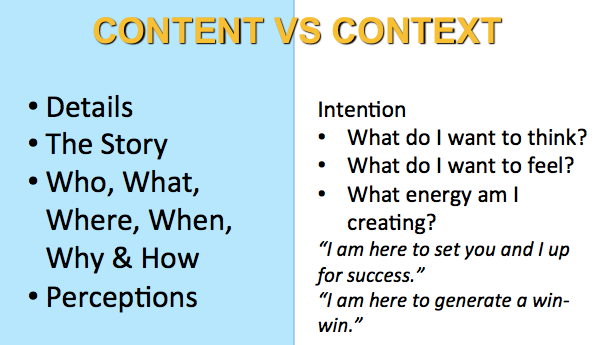
Content is the actual information or material being communicated, such as the words in a text message, the ideas in an article, or the images in a video. Context is the surrounding information or situation that helps explain that material, including the speaker’s purpose, the audience, the setting, and the words around a statement. In short, content tells you what is presented, while context helps you understand how to interpret it.
Key Takeaways
- Content means the information, ideas, or material contained in something.
- Context means the circumstances or surrounding details that help explain its meaning.
- A message can have clear content but still be misunderstood when important context is missing.
- Content and context are related, but they are not interchangeable.
- Context can include tone, timing, audience, background knowledge, and surrounding text.
- Asking “What is being said?” and “What helps explain it?” makes the distinction easier to remember.
What Does Content Mean?
Content is the substance or information contained in a piece of communication or another object. It can include written words, spoken statements, images, videos, data, ideas, and other material.
For example, the content of a news article includes the facts and explanations presented in the story. The content of a presentation includes its slides, information, examples, and main arguments.
Examples of Content in Everyday Life
Content appears in many forms:
- Books: The story, characters, information, and ideas inside a book.
- Websites: Articles, product descriptions, photographs, videos, and instructions.
- Conversations: The statements and subjects people discuss.
- Education: The lessons, explanations, exercises, and facts students learn.
- Social media: The text, images, clips, and other material in a post.
- Business: The information included in a report, email, proposal, or presentation.
Example sentence: The content of the report explains why the company changed its delivery policy.
In this sentence, content refers to the information presented in the report, not the circumstances surrounding the policy change.
How to Use Content in a Sentence
Use content when you are referring to what something contains or communicates.
- The website publishes educational content for new readers.
- I found the content of the lecture useful.
- The video contains content about healthy cooking.
- Please review the content of the email before sending it.
- The teacher updated the course content for the new semester.
Content can also refer to the amount of a substance inside something, as in “the water content of the soil.” It has another meaning as an adjective: content can mean satisfied, as in “She was content with the result.” In the content-versus-context comparison, however, the relevant meaning is usually the information or material being presented.
What Does Context Mean?
Context is the background, surrounding text, or set of circumstances that helps people understand something. It can explain why a statement was made, what a word refers to, or how a message should be interpreted.
The Cambridge English Dictionary describes context in terms of the situation in which something exists or happens, as well as the surrounding text that helps explain a word or passage.
Types of Context
Context takes different forms depending on the situation.
Linguistic context: The words and sentences around a particular expression. These details can help readers identify a word’s meaning or a pronoun’s reference.
Situational context: The immediate circumstances in which something happens, including where, when, and why a conversation takes place.
Historical context: Background information about the time period and events connected to a document, decision, or historical account.
Social and cultural context: Information about relationships, social expectations, cultural practices, and shared assumptions that may influence interpretation.
Audience and purpose: Details about who receives a message and what the writer or speaker wants to achieve. Purdue University’s Online Writing Lab explains that audience and purpose influence effective writing choices.
Examples of Context in a Sentence
- The historical context helps explain the author’s argument.
- I need more context to understand why she made that decision.
- The surrounding sentences provide context for the unfamiliar word.
- Without context, the joke sounded rude.
- The manager explained the context behind the policy change.
In each example, context refers to information that helps explain or interpret something.
What Is the Difference Between Content and Context?
The main difference is the role each one plays. Content supplies the material or message, while context supplies the background needed to interpret it.
| Feature | Content | Context |
|---|---|---|
| Basic meaning | Information or material presented | Background or surrounding circumstances |
| Main question | What is being said or shown? | What helps explain it? |
| Examples | Words, images, data, ideas, videos | Setting, timing, audience, history, surrounding text |
| Role in communication | Delivers the message | Helps people interpret the message |
| Role in reading | Provides the text to understand | Helps clarify words, references, and meaning |
| Example | “The meeting is canceled.” | The meeting was canceled because of a snowstorm. |
A Simple Way to Remember the Difference
Think of a photograph displayed in a museum.
The content is the photograph itself: what it depicts and the visual details it contains. The context includes information about when the photograph was taken, who created it, what was happening at the time, and why the museum displays it.
Another useful memory aid is to ask two questions:
- Content: What information or material am I looking at?
- Context: What background or circumstances help me understand it?
This quick test works for emails, conversations, school assignments, news stories, and online posts.
How Do Content and Context Work Together?
Content and context often work together to create a fuller understanding of a message. Content provides the words or information, while context helps readers or listeners interpret the intended meaning.
Context does not necessarily change the literal words. Instead, it can change how people understand the speaker’s intention, tone, or reference.
Example 1: The Same Words in Different Situations
Consider this message:
“That was brilliant.”
The content is the same in each situation, but the context changes how a reader might interpret it.
- After a successful presentation: The speaker probably means the presentation was excellent.
- After an obvious mistake: The speaker might be using sarcasm to criticize the mistake.
- During a discussion of a clever solution: The speaker is likely praising the idea.
The words alone do not establish the speaker’s exact intention in every situation. The surrounding conversation, tone of voice, and relationship between the speakers provide additional clues.
Example 2: A Short Text Message
Imagine receiving this message from a coworker:
“We need to talk.”
The content is a brief statement saying that a conversation is needed. Its context determines how you might interpret it.
If your coworker has been discussing tomorrow’s project meeting, the message may be routine. If it follows a serious workplace disagreement, you may interpret it as a sign of concern.
That interpretation is not guaranteed. The context provides clues, but you may still need to ask the sender what they mean.
Example 3: A News Headline
Suppose a headline reads, “City Changes Parking Rules.”
The headline is part of the content. Context includes which city made the change, when the rules take effect, what the old rules were, and why officials introduced the new policy.
Without those details, readers may know that a change happened but lack the information needed to understand its practical effects.
Why Does the Difference Between Content and Context Matter?
Understanding content and context helps you communicate accurately, read carefully, and avoid drawing conclusions from incomplete information.
In Writing and Reading
Writers need relevant content to communicate their ideas. Readers need enough context to understand those ideas correctly.
For example, a paragraph may contain an unfamiliar word. The surrounding sentences can provide context clues that help readers infer its meaning. However, context clues are evidence for a possible meaning, not always a substitute for checking a dictionary.
In Professional Communication
An email may contain the correct facts but still confuse its audience if it leaves out the deadline, purpose, or next step.
A useful business message identifies the main information and gives recipients enough background to act on it. This approach supports the audience-focused writing principles discussed by Purdue OWL.
In Education and Research
Students need to distinguish between what a source says and the circumstances that shape its meaning. When analyzing a historical document, for example, the content includes the author’s statements, while context includes the period, intended audience, and events connected to the document.
Researchers also need to consider a source’s scope and limitations. A statement taken out of context may appear to support a conclusion that the full source does not justify.
In Digital Media and Social Media
An online post is content. Its publication date, original source, audience, surrounding discussion, and relationship to a larger event may provide important context.
Before sharing a surprising claim, check the original source and read beyond an isolated sentence or headline. A screenshot or short clip may leave out information needed to interpret the full message.
How to Identify Content and Context Step by Step
Use this simple process whenever you are reading a passage, reviewing a message, or analyzing a source.
- Identify the main message. Write down what the text, image, video, or speaker directly communicates. This is the content.
- Look for surrounding details. Read the sentences before and after the passage, or examine the situation in which the message appeared.
- Identify the audience and purpose. Ask who created the message, who is receiving it, and what the creator may be trying to accomplish.
- Check the setting and timing. Consider when and where the message appeared and whether relevant events affect its interpretation.
- Separate facts from assumptions. Mark what the source directly states and what you are inferring from the context.
- Look for missing information. If several interpretations remain possible, seek a fuller source or ask for clarification.
A Practical Content-and-Context Checklist
Before deciding what a message means, ask:
- What does the message explicitly say or show?
- What information surrounds it?
- Who created it, and who is the intended audience?
- Does tone, timing, history, or setting affect interpretation?
- Am I relying on evidence, or making an assumption?
- Do I need the original source or more information?
This checklist is especially useful for interpreting short messages, evaluating news, analyzing literature, and writing clear explanations.
Common Mistakes When Using Content and Context
People sometimes confuse these words because they often appear in the same discussion. The following mistakes are easy to avoid once you understand their separate roles.
Treating the Words as Synonyms
Incorrect: “The context of the article includes three photographs and two charts,” when the writer means the material included in the article.
Better: “The content of the article includes three photographs and two charts.”
Context would be appropriate if the writer were describing the background needed to understand those photographs and charts.
Assuming Content Always Explains Itself
A statement can be clear at the sentence level but still leave important questions unanswered. “The policy changed yesterday,” for example, tells readers what happened but not which policy changed, who made the decision, or why.
When those details matter, provide context.
Confusing Context With an Unsupported Guess
Context helps people interpret information, but it does not prove every possible interpretation. A delayed reply may have many explanations. Without more evidence, it is inaccurate to claim that the sender is angry or deliberately ignoring someone.
Ignoring the Audience
A technical explanation may work for specialists but confuse beginners. The core content may be accurate, yet the writer may need to add definitions, examples, or background context for a general audience.
Content vs Context in Different Fields
The distinction applies across several subjects, although the details that count as context can vary.
| Field | Content | Context |
|---|---|---|
| English and literature | Words, dialogue, plot, and ideas | Setting, character relationships, genre, and historical background |
| Education | Lesson material and learning information | Students’ prior knowledge, learning goals, and classroom situation |
| Business | Report details, proposals, and instructions | Company goals, audience needs, deadlines, and decisions |
| Journalism | Facts and statements in a story | Original source, date, event background, and surrounding facts |
| Digital marketing | Articles, videos, advertisements, and posts | Platform, audience, campaign purpose, and user needs |
| Data analysis | Recorded values and observations | How, when, where, and under what conditions data was collected |
The same distinction remains useful in each field: content is the material under consideration, while context helps explain its significance.
What Tools Can Help You Understand Content and Context?
You do not need a specialized tool to distinguish the two, but reliable resources can help when a passage is unclear.
- Dictionaries: Use a trusted dictionary, such as the Cambridge English Dictionary or Merriam-Webster, to check definitions and usage.
- Full-text sources: Read the complete paragraph, article, or document instead of relying on an isolated quotation.
- Original records: For news or research, check the original report, statement, transcript, or dataset when available.
- Writing resources: Purdue University’s Online Writing Lab offers guidance on audience, purpose, and effective writing.
- Clarifying questions: In a conversation, ask the speaker what they meant rather than assuming that one interpretation is correct.
Tools can help you find information, but the important step is evaluating whether the source provides enough evidence and context for your conclusion.
Frequently Asked Questions
1. What is the main difference between content and context?
Content is the information or material being presented, such as a sentence, article, image, or video. Context is the background or surrounding circumstances that help explain that material. Content answers “What is being communicated?” Context answers “What information helps me interpret it?” Both are important when a message could be unclear or open to multiple interpretations.
2. Can content and context be used interchangeably?
No. Although the words are related, they describe different concepts. Use content for the information or material contained in something. Use context for the surrounding text, circumstances, or background that helps explain it. Calling an article’s main ideas its context, for example, may confuse readers if you actually mean its content.
3. What is an example of content and context?
Suppose a text message says, “The appointment has been moved.” The message itself is the content. Context includes which appointment the sender means, the original date and new date, and the reason for the change. Without those details, the recipient may understand the sentence but still not know how the change affects their schedule.
4. Why is context important in communication?
Context helps people interpret a message in light of its purpose, audience, setting, and surrounding details. Without it, a joke may sound serious, a short reply may seem unfriendly, or a news statement may be misleading. Context does not guarantee a correct interpretation, but it gives people more evidence and reduces avoidable misunderstandings.
5. What is the difference between content and context in writing?
In writing, content includes the words, claims, examples, arguments, and information a text presents. Context includes details that help readers understand those elements, such as the topic’s background, the intended audience, the purpose of the document, and the surrounding sentences. Good writing provides enough of both to make the main message clear.
6. What is the difference between context and context clues?
Context is the broader background or surrounding information that helps explain something. Context clues are specific hints within nearby words, sentences, or passages that help readers infer the meaning of an unfamiliar word or phrase. In other words, context clues are one way readers use context, particularly during reading comprehension.
7. How can I remember the difference between content and context?
Remember this simple rule: content is what is there; context is what helps explain it. For an article, the information and arguments are its content. The author’s purpose, the intended audience, and the circumstances surrounding the article provide context. Asking “What is the message?” and “What background explains it?” can help you choose the correct word.
8. Can the same content have different meanings in different contexts?
Yes. The same words can be interpreted differently depending on tone, timing, the relationship between speakers, or the surrounding conversation. For instance, “Great job” may express sincere praise after a successful presentation or sarcasm after a mistake. Context helps readers or listeners evaluate these possibilities, although additional clarification may be necessary.
Conclusion: Content vs Context
The difference between content and context is straightforward: content is the information being communicated, while context is the background that helps people understand it. Content gives readers the message; context helps them interpret its meaning, purpose, and significance.
To use these words correctly, identify what a source directly says first. Then consider the surrounding text, audience, purpose, timing, and relevant background. This habit can improve your writing, reading comprehension, research, and everyday conversations.
Next step: Practice with a message, article, or social media post. Identify its content, list the contextual details, and separate what you know from what you are assuming.
Author: Editorial Team
Author bio: The editorial team creates practical English-language guides designed to help readers understand vocabulary, grammar, and everyday word usage.
Reviewer: [Add the name and relevant qualifications of the human reviewer before publication.]
Editorial note: Definitions and examples in this guide are educational explanations. Interpretations of tone or intention may depend on details not available in a short message.