
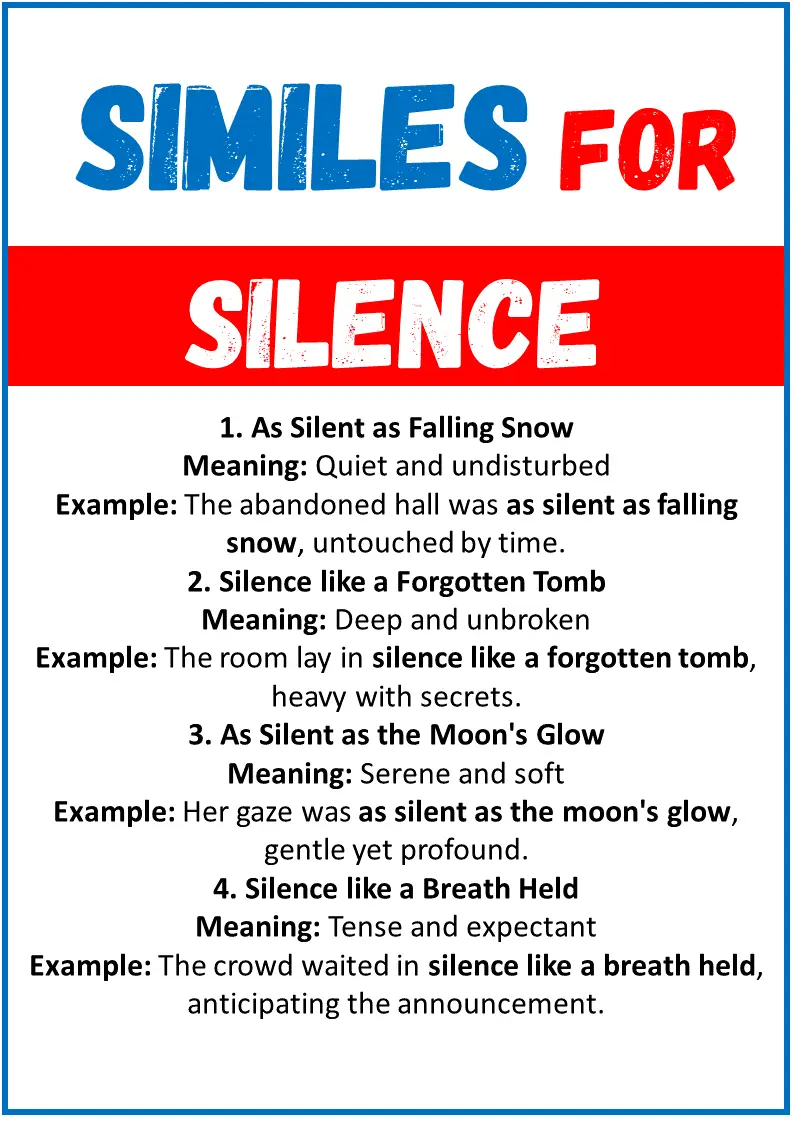
Silence can feel peaceful, tense, mysterious, or deeply emotional. The right simile helps you show exactly what that silence feels like instead of simply calling something “quiet.” This guide gives you 40+ similes for silent situations, along with clear meanings and simple examples.
Whether you are working on creative writing, descriptive writing, storytelling, or poetry, these comparisons can make your writing more vivid. You will also find silence imagery, examples for different moods, common mistakes, and practical tips for choosing the right comparison.
What Is a Simile for Silent?
A simile is a figure of speech that makes a direct comparison between two things using words such as like or as. For example, “The room was as silent as the grave” compares the room’s quietness with the traditional image of a grave. Cambridge Dictionary defines a simile as an expression that compares one thing with another using “as” or “like.”
A simile for silent describes silence, quiet, or stillness by connecting it with something familiar. Since silence can mean an absence of sound or a lack of speaking, the comparison you choose should match the situation and mood. (Cambridge Dictionary)
40+ Similes for Silent With Meanings and Examples
Here are similes for silent with meanings that you can use in essays, stories, poems, captions, and everyday sentences. Each comparison creates a slightly different feeling, from peaceful silence to tense silence.
| # | Silent Simile | Meaning | Example |
| 1 | As silent as the grave | Completely and eerily quiet | The old house was as silent as the grave. |
| 2 | As quiet as a mouse | Extremely quiet and careful | The child was as quiet as a mouse. |
| 3 | As silent as falling snow | Soft, gentle, natural silence | The garden was as silent as falling snow. |
| 4 | As quiet as a sleeping child | Calm and peaceful quiet | The room was as quiet as a sleeping child. |
| 5 | As silent as a frozen lake | Deep, undisturbed silence | The valley was as silent as a frozen lake. |
| 6 | As quiet as moonlight | Soft and peaceful silence | The bedroom felt as quiet as moonlight. |
| 7 | As silent as a closed book | No words or communication | He sat as silent as a closed book. |
| 8 | As quiet as a blank page | Empty and undisturbed | The classroom was as quiet as a blank page. |
| 9 | As silent as a stopped clock | Strange, unnatural quiet | The office felt as silent as a stopped clock. |
| 10 | As quiet as the desert air | Vast and uninterrupted quiet | The campsite was as quiet as the desert air. |
| 11 | As silent as the stars | Remote and peaceful silence | The mountain was as silent as the stars. |
| 12 | As quiet as deep water | Heavy, hidden quiet | The cave was as quiet as deep water. |
| 13 | As silent as mist | Soft and almost unreal quiet | The forest became as silent as mist. |
| 14 | As quiet as a winter morning | Calm natural quiet | The town was as quiet as a winter morning. |
| 15 | As silent as a cave | Dark, enclosed silence | The tunnel was as silent as a cave. |
| 16 | As quiet as a whisper | Extremely soft | The children became as quiet as a whisper. |
| 17 | As silent as moonlight on snow | Beautiful, gentle silence | The valley was as silent as moonlight on snow. |
| 18 | As quiet as a sleeping forest | Natural and peaceful quiet | The park was as quiet as a sleeping forest. |
| 19 | As silent as an empty church | Solemn and deep silence | The building stood as silent as an empty church. |
| 20 | As quiet as a deserted street | Little or no activity | The road was as quiet as a deserted street. |
| 21 | As silent as a shadow | Almost impossible to notice | She moved as silent as a shadow. |
| 22 | As quiet as a candle flame | Gentle and delicate quiet | The room stayed as quiet as a candle flame. |
| 23 | As silent as a buried secret | Hidden and mysterious | His thoughts were as silent as a buried secret. |
| 24 | As quiet as an empty library | Calm and controlled | The hall was as quiet as an empty library. |
| 25 | As silent as a sleeping village | Peaceful nighttime silence | The village was as silent as a sleeping village. |
| 26 | As quiet as fresh snow | Soft, peaceful stillness | The morning felt as quiet as fresh snow. |
| 27 | As silent as a moonlit night | Calm and mysterious | The garden was as silent as a moonlit night. |
| 28 | As quiet as an abandoned road | Empty and lonely | The highway was as quiet as an abandoned road. |
| 29 | As silent as a distant star | Remote and faint | The mountain seemed as silent as a distant star. |
| 30 | As quiet as deep sleep | Complete peacefulness | The house was as quiet as deep sleep. |
| 31 | As silent as an empty theater | Still after activity ends | The theater became as silent as an empty theater. |
| 32 | As quiet as a hidden garden | Peaceful and secluded | The courtyard was as quiet as a hidden garden. |
| 33 | As silent as an unopened letter | Unspoken thoughts or feelings | His response was as silent as an unopened letter. |
| 34 | As quiet as a sleeping bird | Gentle and delicate quiet | The nest was as quiet as a sleeping bird. |
| 35 | As silent as the night sky | Vast and peaceful | The desert was as silent as the night sky. |
| 36 | As quiet as still water | Smooth and undisturbed | The pond was as quiet as still water. |
| 37 | As silent as a shadow at midnight | Deep and mysterious | The hallway was as silent as a shadow at midnight. |
| 38 | As quiet as a forgotten room | Lonely and undisturbed | The attic was as quiet as a forgotten room. |
| 39 | As silent as an empty page | No words or expression | Her answer remained as silent as an empty page. |
| 40 | As quiet as a sleeping moon | Gentle and poetic quiet | The town rested as quiet as a sleeping moon. |
| 41 | As silent as a held breath | Suspenseful, tense silence | Everyone waited as silent as a held breath. |
| 42 | As quiet as desert air | Vast, natural stillness | The landscape was as quiet as desert air. |
The familiar expression “as silent as the grave” is also recorded by Cambridge Dictionary, where it describes something as completely silent. (Cambridge Dictionary)
Familiar Similes for Silence
Some silent similes are easy for readers to understand because they use familiar images. “As quiet as a mouse,” “as silent as the grave,” and “as quiet as a whisper” immediately communicate strong quietness.
These comparisons work especially well when you need simple ways to describe silence without making your sentence overly poetic. For another example of careful word choice, you can also explore the difference between [Segway or Segue].
Creative Similes for Silence
More unusual comparisons can create stronger imagery. A silence can be “as quiet as a closed book,” “as still as deep water,” or “as silent as falling snow.” These phrases allow writers to communicate atmosphere instead of merely stating that nobody is making a sound.
Creative comparisons are especially useful in descriptive writing, fiction, and poetry because they give readers something visual to imagine. The best phrase depends on whether your scene feels peaceful, mysterious, emotional, or eerie.
Nature-Based Similes for Silent
Nature provides endless inspiration for silence imagery. You can compare quietness with falling snow, a frozen lake, desert air, mist, stars, deep water, or a moonlit night.
These comparisons create natural silence and quiet imagery without explaining everything directly. Instead, readers picture the scene and experience its atmosphere for themselves.
Similes for Silent Based on Different Types of Silence
Not every kind of silence feels the same. Peaceful silence may feel comforting, while tense silence can make a reader expect something to happen. Choosing a comparison that matches the emotional setting makes your writing much stronger.
Peaceful and Calm Silence
For calm silence, choose gentle images such as falling snow, moonlight, still water, or a sleeping child. These comparisons suggest safety, rest, reflection, and comfort rather than fear.
For example, “The cabin was as quiet as falling snow” creates a soft atmosphere. The sentence does more than describe quietness because it also gives the reader an emotional impression.
Deep and Complete Silence
When you want to show complete silence, use images that suggest emptiness or total stillness. “As silent as the grave” and “as quiet as a frozen lake” create a powerful sense of absolute silence.
Cambridge Dictionary describes silence as a period without sound or complete quiet, while its American Dictionary gives “absence of sound” as part of the meaning.
Tense and Unsettling Silence
Tense silence often appears before an argument, discovery, decision, or unexpected event. Comparisons involving a held breath, stopped clock, or empty hallway can create suspense.
For example, “The room was as silent as a held breath” suggests that everyone is waiting. The silence becomes part of the action rather than simply an absence of sound.
Mysterious and Eerie Silence
A mysterious silence works well in horror stories, suspense scenes, and unusual settings. Try comparisons involving shadows, caves, abandoned rooms, or moonlit landscapes.
For instance, “The corridor was as silent as a shadow at midnight” creates an eerie atmosphere. It leaves readers wondering what might appear next.
Emotional Silence
Sometimes silence represents emotion rather than quietness. A person may remain silent because of sadness, embarrassment, anger, grief, or uncertainty.
In such cases, comparisons such as “as silent as an unopened letter” can suggest unspoken words and hidden feelings. Cambridge also distinguishes silence from speaking, noting that silence can describe a state of not speaking or communicating. (Cambridge Dictionary)
Positive and Negative Similes for Silent
The same idea of silence can create completely different impressions. A peaceful comparison may make a scene feel safe, while a darker comparison can make it feel threatening.
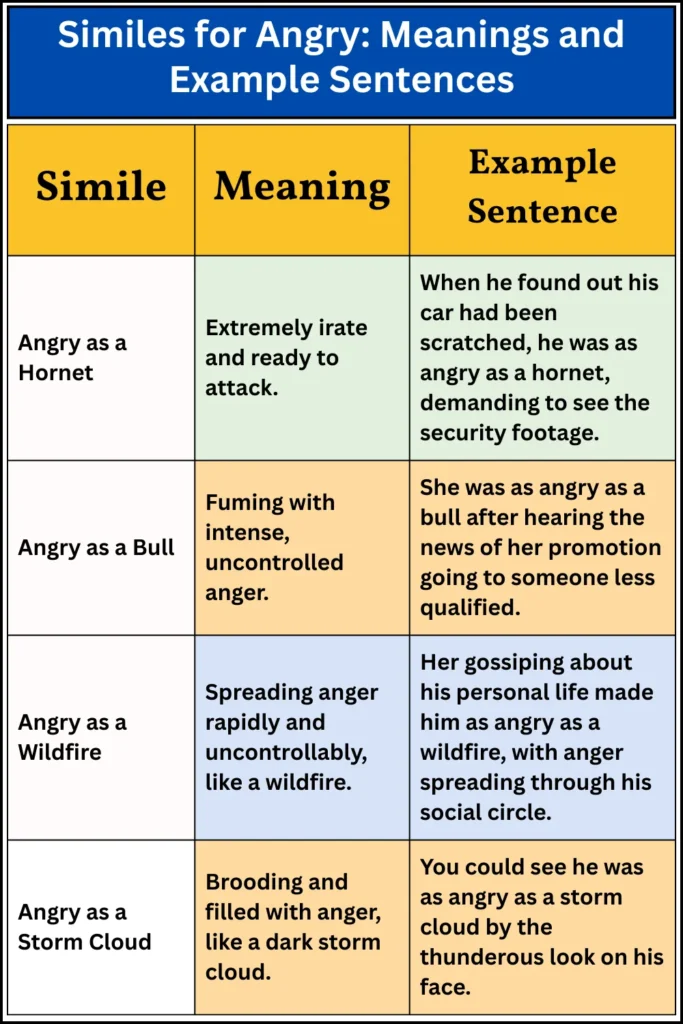
| Type | Simile | Feeling Created |
| Positive | As quiet as falling snow | Peaceful |
| Positive | As quiet as still water | Calm |
| Positive | As silent as moonlight | Gentle |
| Positive | As quiet as a sleeping child | Comforting |
| Positive | As silent as the stars | Reflective |
| Negative | As silent as the grave | Eerie |
| Negative | As silent as a stopped clock | Unsettling |
| Negative | As quiet as an abandoned road | Lonely |
| Negative | As silent as a buried secret | Mysterious |
| Negative | As quiet as a forgotten room | Empty |
This distinction matters in storytelling. If you want a relaxing scene, choose soft and natural imagery. If you want tension, use imagery that suggests emptiness, uncertainty, danger, or something left unsaid.
Examples of Similes for Silent in Sentences
Seeing simile examples in complete sentences makes them easier to understand and reuse. Notice how each comparison adds a specific feeling instead of simply repeating the word “quiet.”
| Simile | Example Sentence |
| As silent as the grave | The old mansion was as silent as the grave. |
| As quiet as a mouse | The boy entered the room as quiet as a mouse. |
| As silent as falling snow | The morning was as silent as falling snow. |
| As quiet as still water | The lake was as quiet as still water. |
| As silent as a shadow | She slipped through the hallway as silent as a shadow. |
| As quiet as deep sleep | The house became as quiet as deep sleep. |
| As silent as a cave | The tunnel was as silent as a cave. |
| As quiet as a whisper | The audience became as quiet as a whisper. |
| As silent as moonlight | The garden seemed as silent as moonlight. |
| As quiet as fresh snow | The forest was as quiet as fresh snow. |
| As silent as a held breath | The crowd stood as silent as a held breath. |
| As quiet as a sleeping child | The nursery was as quiet as a sleeping child. |
For more guidance on choosing precise words in your writing, you can also read [Requester vs. Requestor] when you are comparing similar terms.
Simile vs Metaphor for Silence
A simile and a metaphor both create non-literal language, but they usually work differently. A simile directly signals the comparison with “like” or “as,” while a metaphor presents one thing as another.
| Device | Example | How It Works |
| Simile | The room was as silent as a grave. | Uses “as” to compare |
| Simile | The room was quiet like a sleeping forest. | Uses “like” to compare |
| Metaphor | The room was a grave. | Directly identifies the room with the image |
| Literal language | The room was silent. | States the fact directly |
If you want readers to recognize the comparison clearly, a simile is usually the easiest choice. Cambridge Dictionary specifically describes a simile as an expression that compares one thing with another using “as” or “like.” (Cambridge Dictionary)
How to Choose the Right Simile for Silent
Start by deciding what kind of silence you want the reader to experience. Ask yourself whether the scene is peaceful, tense, mysterious, emotional, eerie, or simply quiet.
Then choose an image that naturally supports that feeling. Falling snow works for gentleness, a held breath works for suspense, and a grave works for darker or unsettling silence. A good comparison should strengthen your sentence rather than distract from it.
Match the Mood
Your tone should guide your comparison. A romantic scene may benefit from moonlight, stars, or still water, while a suspense scene may need a stopped clock or held breath.
This approach makes your figurative language for silence feel purposeful. Instead of adding a decorative phrase, you use the comparison to build the scene.
Consider Your Audience
Simple comparisons usually work best when your readers need immediate clarity. “As quiet as a mouse” is familiar, while “as silent as an unopened letter” feels more imaginative.
If you are writing for children, students, or general readers, choose familiar images first. In poetry or literary creative writing, you can experiment with more unusual comparisons.
Common Mistakes When Using Similes for Silent
Even a creative comparison can weaken a sentence if you use it incorrectly. The most common problem is choosing an image that does not match the intended mood.
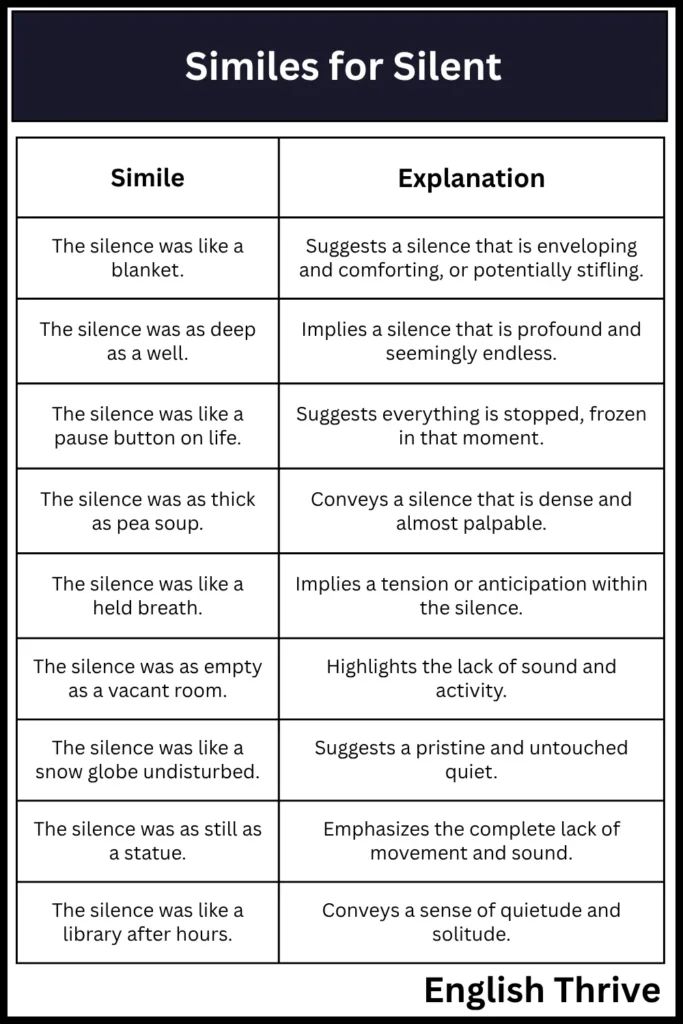
| Mistake | Why It Does Not Work | Better Approach |
| Using the same simile repeatedly | Writing becomes predictable | Vary your imagery |
| Choosing a random image | The comparison feels forced | Match the scene |
| Mixing simile and metaphor | The sentence becomes unclear | Use one clear structure |
| Overusing “as quiet as” | Repetition reduces impact | Vary sentence structure |
| Using complicated imagery | Readers may miss the meaning | Choose clear images |
| Ignoring tone | The comparison may create the wrong feeling | Match the emotional setting |
| Explaining every comparison | Writing can become heavy | Let imagery speak naturally |
Another common writing problem is choosing a word simply because it sounds similar to another word. Precision matters in descriptive writing. For another useful example of standard English word choice, see [Incomplete vs. Uncomplete].
Practice Exercise: Choose the Best Simile for Silent
Try choosing the comparison that best completes each sentence. Think about the atmosphere, emotion, and setting before checking the answers.
| # | Sentence | Best Answer |
| 1 | The snowy village was as quiet as _____. | falling snow |
| 2 | Everyone waited for the announcement as silent as _____. | a held breath |
| 3 | The abandoned house was as silent as _____. | the grave |
| 4 | The peaceful pond was as quiet as _____. | still water |
| 5 | The dark hallway was as silent as _____. | a shadow |
| 6 | The empty desert was as quiet as _____. | desert air |
| 7 | The sleeping baby was as quiet as _____. | a sleeping child |
| 8 | The strange tunnel was as silent as _____. | a cave |
The goal is not simply to find a grammatically correct answer. You should choose the image that creates the intended tone and atmosphere.
Final Thoughts on Using Similes for Silent
The best similes for silent do more than tell readers that something makes no noise. They create an image, establish a mood, and help readers feel the scene. A peaceful comparison can calm the reader, while a darker one can create suspense or uncertainty.
When you choose your comparison, think about the emotion behind the silence. Whether you need similes for quiet, silence similes, or creative ways to describe quietness, choose an image that fits your scene naturally. Strong figurative language makes simple sentences memorable.
Frequently Asked Questions
What is a good simile for silent?
“As silent as the grave” is a familiar example for complete or eerie quiet. For a gentler feeling, “as silent as falling snow” works well.
What is a simile for very quiet?
You can say “as quiet as a mouse,” “as quiet as a whisper,” or “as quiet as still water.” The best option depends on the mood you want to create.
What are some creative similes for silence?
Creative options include “as silent as a closed book,” “as quiet as moonlight,” “as silent as an unopened letter,” and “as quiet as deep water.”
What is a simile for peaceful silence?
“As quiet as falling snow,” “as quiet as still water,” and “as silent as moonlight” can express peaceful silence.
What is a simile for tense silence?
“As silent as a held breath” is useful for tense silence because it suggests anticipation and suspense.
What is the difference between silent and quiet?
Silent generally suggests an absence of sound or speaking, while quiet can describe something that makes little or no noise. Cambridge Dictionary lists “silent” as meaning without sound and also without talking. (Cambridge Dictionary)
Why use similes for silence?
Silence similes make abstract feelings easier to visualize. Instead of simply writing “the room was quiet,” you can create a stronger picture by comparing it with snow, shadows, still water, or another familiar image.