
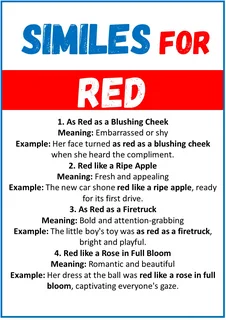
If you need a vivid way to describe the color red, a good comparison can transform an ordinary sentence. Similes for Red help you show whether something looks bright like a cherry, deep like wine, or fiery like lava. They also let you connect color with mood, setting, and emotion. Instead of repeatedly writing “very red,” you can give readers a familiar image that makes the shade easier to picture. Whether you are writing a poem, story, school assignment, or descriptive passage, the right red simile adds detail without requiring a long explanation. Below, you will find more than 30 useful comparisons, their meanings, example sentences, and practical advice for using them naturally.
Similes for Red: Quick Answer
Some common Similes for Red include as red as a rose, as red as fire, as red as blood, as red as a cherry, as red as a ruby, as red as wine, and as red as an ember. Choose the comparison according to the shade, mood, and context you want to create.
What Is a Simile? A Quick Definition
A simile is a figure of speech that compares one thing with another by using words such as “like” or “as.” Cambridge Dictionary defines a simile as an expression that compares one thing with another and includes “as” or “like.” For example, “Her cheeks were as red as a tomato” compares cheeks with a tomato to emphasize their vivid color. The comparison gives readers a familiar visual reference instead of relying on a plain adjective.
A simile differs from a metaphor because the comparison remains explicit. “The sky was red like fire” signals the comparison directly, while “The sky was fire” uses a metaphorical identification. In practice, both devices create imagery, but a simile often makes the intended connection easier for readers to recognize.
What Makes Something a Simile?
The clearest clue is usually like or as. For example, “The dress was as red as a cherry” directly connects the dress with the fruit. However, not every use of “like” creates a simile. Cambridge notes that “like” has several grammatical uses, including expressing similarity. The important point is that the word should establish an actual comparison.
How Do Similes Describe the Color Red?
A red simile connects the color with something readers already recognize. A cherry can suggest a glossy bright red, while an ember can suggest a darker glowing shade. This gives the reader more information than simply saying “red.”
That extra detail also creates color imagery and emotional imagery. The comparison can suggest warmth, romance, danger, embarrassment, luxury, or intensity without stating every feeling directly.
30+ Similes for Red With Meanings and Examples
The following red simile examples cover different shades and situations. Some are familiar expressions, while others work better as creative comparisons. Their emotional meanings are contextual rather than fixed rules.
1. As Red as a Rose
Meaning: A rich, vivid floral red.
Example: Her lips were as red as a rose in full bloom.
This is a classic comparison for romantic or beautiful descriptions. It works especially well in poetry, stories, and character descriptions.
2. As Red as Fire
Meaning: A bright, fiery, intense red.
Example: The clouds looked as red as fire above the horizon.
Fire adds a sense of heat and movement to the color. Use it when you want the description to feel energetic or dramatic.
3. As Red as Blood
Meaning: A deep, striking red.
Example: The mark on the white cloth was as red as blood.
This comparison creates a much darker tone than a rose or cherry. It works best in serious, dramatic, mysterious, or intense scenes.
4. As Red as a Cherry
Meaning: A bright, glossy, fresh red.
Example: Her new shoes were as red as a cherry.
Cherry red feels lively and approachable. It can suit clothing, fruit, decorations, accessories, or playful descriptions.
5. As Red as a Tomato
Meaning: A noticeable bright red, especially when describing a flushed face.
Example: After everyone laughed, his face became as red as a tomato.
This is a particularly useful everyday comparison. It works naturally for embarrassment, heat, exertion, or humor.
6. As Red as a Strawberry
Meaning: A fresh, lively red with a soft and cheerful quality.
Example: Her scarf was as red as a strawberry.
Strawberry imagery tends to feel lighter than blood or lava. It can work well in children’s writing and gentle descriptive passages.
7. As Red as a Ruby
Meaning: A rich, deep, jewel-like red.
Example: The necklace contained stones as red as rubies.
Ruby imagery suggests richness and visual beauty. It works especially well for jewelry, clothing, fantasy settings, and luxurious objects.
8. As Red as Wine
Meaning: A deep, dark, sophisticated red.
Example: The theater curtains were as red as wine.
This comparison creates a mature and atmospheric impression. It can work particularly well when describing fabric, interiors, sunsets, or romantic settings.
9. As Red as an Ember
Meaning: A glowing, deep red associated with fading heat.
Example: The coals remained as red as embers after midnight.
Ember imagery suggests warmth without the explosive brightness of fire. It is useful for fireplaces, campfires, sunsets, and quiet nighttime scenes.
10. As Red as the Setting Sun
Meaning: A warm, glowing sunset red.
Example: The clouds were as red as the setting sun.
This comparison works naturally in landscape and nature writing. It also adds time and atmosphere to the image.
11. As Red as Lava
Meaning: An intensely heated or glowing red.
Example: The molten rock looked as red as lava beneath the dark sky.
Lava suggests heat, power, and danger. It is a strong choice for fantasy, action, or dramatic writing.
12. As Red as a Poppy
Meaning: A vivid natural floral red.
Example: Her ribbon was as red as a poppy.
The poppy gives you a strong natural image without making the scene feel as aggressive as fire or lava. It works well in poetry and nature descriptions.
13. As Red as Cranberries
Meaning: A rich, darker red associated with the fruit.
Example: The berries looked as red as cranberries in the autumn bowl.
This comparison fits food writing and seasonal scenes particularly well. It can also add a subtle autumn atmosphere.
14. As Red as Pomegranate Seeds
Meaning: A glossy, deep red.
Example: The beads shimmered as red as pomegranate seeds.
This is a more distinctive comparison than the familiar rose. It works when you want detailed visual imagery with a jewel-like quality.
15. As Red as a Ruby Apple
Meaning: A polished, vivid red.
Example: The fruit looked as red as a ruby apple beneath the sunlight.
For natural U.S. English, “as red as a ruby” or “as red as a ripe apple” will usually sound smoother. The ruby-apple version works better as an intentionally creative phrase.
16. As Red as Velvet Curtains
Meaning: A rich, deep, luxurious red.
Example: The old theater had curtains as red as velvet.
The comparison can suggest both color and texture. It is useful for theaters, elegant interiors, clothing, and dramatic settings.
17. As Red as Hot Iron
Meaning: A heated, intense red.
Example: The metal glowed as red as hot iron.
Hot iron gives the reader both color and temperature. It is especially effective in industrial, fantasy, or high-intensity scenes.
18. As Red as a Chili Pepper
Meaning: A vivid, fiery red.
Example: Her lipstick was as red as a chili pepper.
The comparison feels bold and energetic. It can work particularly well for food, fashion, humor, and descriptions involving strong color.
19. As Red as a Flame
Meaning: A bright, lively, glowing red.
Example: The banner moved as red as a flame in the wind.
A flame gives the color movement and energy. Use it when the object seems to flicker, wave, glow, or move.
20. As Red as a Dragon’s Breath
Meaning: A fantastical, blazing red.
Example: Smoke poured from the cave as red as a dragon’s breath.
This is primarily a creative or fantasy comparison. It works well in imaginative stories where ordinary color references might feel too predictable.
21. As Red as a Ruby Ring
Meaning: A rich, precious-looking red.
Example: The gemstone shone as red as a ruby ring.
Because the ruby already supplies the main color reference, “as red as a ruby” is often more concise. The ring version works when the surrounding scene focuses on jewelry.
22. As Red as a Cardinal’s Feathers
Meaning: A strong, vivid natural red.
Example: The bird’s feathers were as red as a cardinal’s feathers.
For precision, this wording is better than “as red as a cardinal bird.” It identifies the actual feature being compared.
23. As Red as a Beet
Meaning: Extremely flushed or noticeably red.
Example: After running across the field, his face was as red as a beet.
For a U.S. audience, “beet” is the natural everyday term. “Beetroot” is also valid English but is more strongly associated with British usage.
24. As Red as Autumn Leaves
Meaning: A warm, earthy seasonal red.
Example: The hillside was covered with foliage as red as autumn leaves.
This comparison works naturally in fall descriptions. You can make it more precise by using “red as autumn foliage” when you want to avoid repeating “leaves.”
25. As Red as a Fire Truck
Meaning: A bold, highly visible red.
Example: The vintage truck was as red as a fire truck.
This comparison uses a familiar American object as a visual reference. It works well for cars, signs, buildings, clothing, and toys.
26. As Red as a Stop Sign
Meaning: A vivid red associated with warning and visibility.
Example: His jacket was as red as a stop sign.
The comparison does more than describe color. Depending on context, it can also suggest urgency or attention.
27. As Red as Roses in June
Meaning: A vivid, blooming natural red.
Example: Her cheeks glowed as red as roses in June.
This version has a more poetic feel than the simpler rose comparison. The seasonal detail creates a fuller mental image.
28. As Red as a Painted Door
Meaning: A bold artificial red.
Example: The cottage had a door as red as fresh paint.
“Fresh paint” is often the more natural comparison because a painted door can be any color. The phrase works best when the surrounding context establishes the red shade.
29. As Red as a Neon Sign
Meaning: A bright artificial red that strongly attracts attention.
Example: The diner sign was as red as a neon sign against the dark street.
Neon imagery is useful for urban scenes and nighttime descriptions. It creates brightness rather than natural warmth.
30. As Red as Lipstick
Meaning: A bold, saturated cosmetic red.
Example: Her scarf was as red as lipstick.
This comparison works well for fashion, beauty, accessories, and character descriptions. It can suggest a confident or dramatic visual style.
31. As Red as a Garnet
Meaning: A deep, dark jewel red.
Example: The pendant was as red as a garnet.
Garnet imagery gives red a darker and more subdued quality than a bright cherry. It works particularly well for jewelry and elegant descriptions.
32. As Red as Glowing Coal
Meaning: A dark red with an internal glow.
Example: The campfire coals were as red as glowing coal.
This comparison suits fire, night scenes, and atmospheric writing. It creates the impression of heat that remains after the flames have weakened.
33. As Red as a Warning Light
Meaning: A strong red that demands attention.
Example: The indicator flashed as red as a warning light.
This works well when you want both visual detail and a sense of urgency. The surrounding context determines whether that urgency is literal or figurative.
34. As Red as a Scarlet Ribbon
Meaning: A vivid, saturated decorative red.
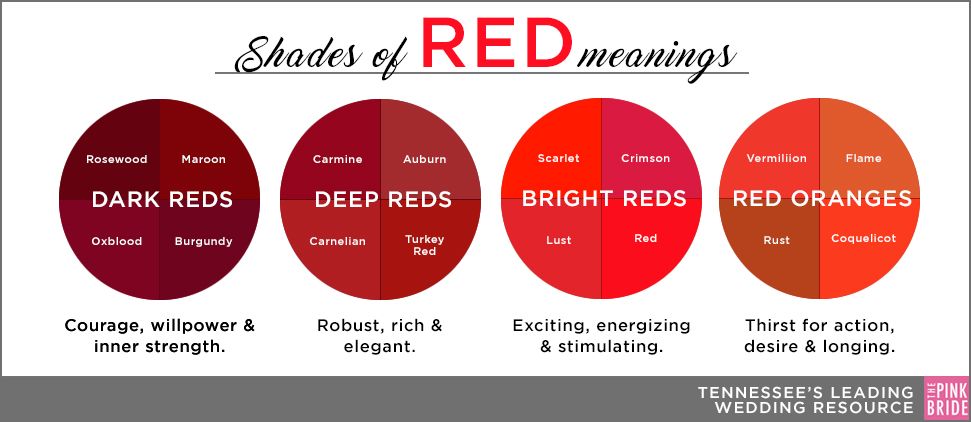
Example: The gift was tied with a ribbon as red as scarlet.
Scarlet is traditionally used as a vivid red color term. This comparison works well for clothing, decorations, celebrations, and literary descriptions.
Red Similes by Shade, Mood, and Meaning
A major advantage of using red similes is that they let you describe more than the basic color. Red has many visual variations, from bright cherry and scarlet to deep wine and garnet. Choosing a reference that matches the actual shade makes your writing more precise.
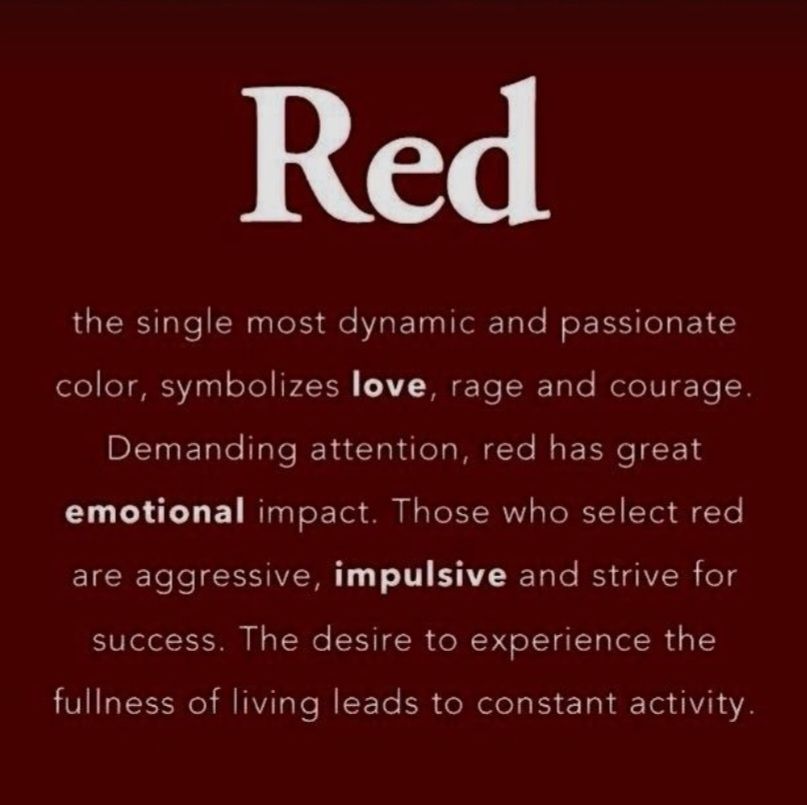
The emotional effect also depends on context. A rose and a warning light may both be red, but they create very different associations. Research discussed by the American Psychological Association indicates that red is commonly associated with emotions including anger and love across cultures, while also noting that cultural factors can shape additional associations.
Similes for Bright Red
Use as red as a cherry, as red as fire, as red as a poppy, as red as a fire truck, or as red as a neon sign when you want strong visual brightness.
These comparisons work especially well for clothing, signs, flowers, vehicles, decorations, and objects that need to stand out.
Similes for Dark Red
For a darker shade, try as red as wine, as red as blood, as red as a garnet, or as red as an ember.
These comparisons create more depth than a basic “bright red” description. They work particularly well in dramatic, elegant, or atmospheric writing.
Similes for Deep Crimson Red
Deep red can be compared with rubies, garnets, wine, pomegranate seeds, or rich velvet.
These images are useful when you want a sophisticated or luxurious tone. They can describe fabrics, jewelry, flowers, interiors, and evening scenes.
Similes for Warm or Fiery Red
Use fire, flames, lava, hot iron, or glowing coal for warm and fiery imagery.
These comparisons emphasize heat, energy, movement, or intensity. They are especially effective in action scenes and fantasy writing.
Similes for Soft or Romantic Red
For gentle or romantic imagery, choose a rose, rose petal, strawberry, wine, or a Valentine card.
These references generally feel softer than blood, lava, or warning lights. Your surrounding words still determine the final mood.
Similes for Angry or Dangerous Red
Fire, lava, blood, warning lights, and stop signs can support intense or dangerous imagery.
However, do not treat red as automatically meaning anger or danger. Color associations are influenced by context and culture, and research does not support the simplistic idea that seeing red automatically produces a specific emotion.
Similes for Embarrassed or Flushed Red
For a person’s flushed face, as red as a tomato and as red as a beet are especially natural.
These comparisons work because readers can quickly imagine a face becoming visibly red. They are useful in humorous, casual, and character-driven writing.
What Do Red Similes Symbolize?
Red similes can carry symbolic meaning when the comparison connects color with a familiar object or experience. Still, symbolism is not a fixed dictionary definition. The same red image can produce different effects depending on the genre and context.
For example, a rose may suggest romance, while a stop sign suggests caution. A flame can represent warmth in one passage and destruction in another. The comparison and surrounding language work together.
Red as a Symbol of Love and Passion
Rose, wine, lipstick, and Valentine imagery can support romantic descriptions. These references are particularly useful when you want warmth, beauty, attraction, or passion.
The important point is that the symbol comes from the larger cultural and contextual association, not from the color alone. APA’s discussion of international research identifies love as one common emotion associated with red.
Red as a Symbol of Anger and Intensity
Fire, lava, and flames can make red feel forceful or emotionally charged. They are useful when a character is furious or a scene needs greater intensity.
Research also finds a strong association between red and anger in color-emotion studies. However, that association should not be treated as proof that red itself causes anger.
Red as a Symbol of Danger and Warning
Stop signs and warning lights are useful comparisons because they have familiar visual functions. They can suggest urgency, caution, or immediate attention.
This makes them particularly effective in fiction and descriptive writing when you want a reader to notice an object quickly.
Red as a Symbol of Energy and Power
Fire, hot iron, and glowing coal can make red appear energetic. They suggest heat, motion, transformation, or physical force.
These images work particularly well in action scenes because they combine color with another sensory quality.
Red as a Symbol of Beauty and Luxury
Ruby, garnet, velvet, and wine can give red a rich or elegant character. Such imagery suits jewelry, clothing, interiors, and romantic settings.
These comparisons also help distinguish a dark luxurious red from a bright playful red.
Why Context Changes the Meaning of Red
A color association does not work in isolation. “Her dress was as red as a rose” creates a different impression from “the warning light was as red as a rose.” The surrounding object and situation change the meaning.
Research on color and emotion similarly distinguishes between learned associations and the actual emotional effects of seeing a color. The APA notes that controlled research on whether colors directly cause specific emotions remains more complicated than common color metaphors suggest.
How to Use Similes for Red in Creative Writing
The best comparison supports the sentence instead of competing with it. Before choosing one, ask yourself what the reader should notice: shade, brightness, heat, mood, texture, movement, or symbolism.
You should also consider genre. A fantasy novel can comfortably use a dragon’s breath, while an academic paper may need a much simpler description. Good descriptive language depends on purpose.
Using Red Similes in Poetry
Poetry gives you room to experiment with visual imagery and unusual comparisons. A sunset might glow “as red as embers,” while a flower could be “as red as a ruby.”
Try to choose imagery that also supports the poem’s rhythm and emotional atmosphere.
Using Red Similes in Stories
Stories can use red comparisons to show character reactions and build settings. Instead of simply stating that someone became embarrassed, you can describe the character’s cheeks as “as red as a tomato.”
This technique gives readers a visual detail while keeping the narrative active.
Using Red Similes in Songs
Songs often benefit from short, memorable comparisons. As red as fire or as red as a rose can communicate an idea quickly.
However, the phrase should fit the song’s voice and rhythm. A technically clever comparison can still sound awkward if it does not belong in the lyric.
Using Red Similes in Essays
Academic writing usually favors precision over decorative language. A simile can still work in literary analysis, reflective writing, or an assignment that specifically asks for figurative language.
When clarity matters most, use one purposeful comparison rather than filling a paragraph with figurative expressions.
Using Red Similes in Descriptive Writing
Descriptive writing benefits from concrete reference points. You can describe a scarf as cherry red, a curtain as wine red, and coals as ember red.
This variation prevents repetitive adjectives while helping the reader build a more detailed mental picture.
Creative Red Simile Examples in Sentences
Once you understand the basic comparisons, the next step is seeing how they work inside complete sentences. The following examples show how red imagery can describe people, nature, objects, emotions, and settings.
Red Similes for Describing People
Her cheeks were as red as a tomato after she realized everyone had heard her mistake. His face became as red as a beet after the long run.
These examples use familiar comparisons to show physical reactions. The similes make the description more immediate than simply saying the characters looked red.
Red Similes for Describing Nature
The evening clouds were as red as the setting sun. Across the hillside, the leaves looked as red as autumn foliage.
Nature writing works particularly well with comparisons involving sunsets, flowers, embers, and autumn leaves. These references naturally connect color with atmosphere.
Red Similes for Describing Objects
The vintage car was as red as a fire truck, while its polished emblem gleamed as red as a ruby.
Object descriptions become stronger when the comparison matches the object’s physical qualities. Use bright references for highly visible objects and deeper references for polished or luxurious ones.
Red Similes for Describing Emotions
His anger burned as red as fire, while her embarrassed cheeks were as red as a tomato.
Here, the comparisons help separate different emotional states. Fire suggests intensity, while tomato imagery suggests visible flushing.
Red Similes for Describing Places and Scenes
The old theater glowed with curtains as red as wine, while a neon sign outside shone as red as a warning light.
Combining carefully chosen comparisons can establish a scene quickly. Just make sure the images complement each other rather than creating visual confusion.
How to Create Your Own Similes for Red
You do not have to rely on familiar phrases every time. You can create original comparisons by identifying the exact quality of red you want to communicate.
Start with the shade, choose a matching image, and then consider the emotional effect. For example, a glowing dark red could suggest an ember, while an artificial bright red could suggest neon.
Start With the Exact Shade of Red
First decide whether you mean bright red, dark red, crimson, scarlet, ruby red, cherry red, or another variation.
A shade gives you a starting point. You can then search your own experience for something with a similar appearance.
Choose a Familiar Image
Think about nature, food, objects, animals, fire, light, and everyday surroundings.
For example, a cherry suggests glossy brightness, while a garnet suggests deeper color. Familiar references usually make the resulting simile easier to understand.
Match the Image to the Mood
Next, decide whether the scene should feel romantic, playful, dangerous, peaceful, dramatic, or mysterious.
A rose can support romance. A warning light can support urgency. An ember can create a quieter and warmer atmosphere.
Make the Comparison Specific
Avoid vague phrases such as “very red” when a concrete comparison would communicate more.
Instead of writing, “The sunset was very red,” you might write, “The clouds glowed as red as embers above the horizon.” The second version gives the reader a clearer image.
Avoid Forced or Confusing Comparisons
Originality should not come at the expense of clarity. If your reader cannot understand why two things were compared, revise the image.
A good simile should feel intentional. It should strengthen the sentence rather than make the reader stop and decode it.
Examples of Original Red Similes
You might describe a glowing sign as “red as a spark trapped in glass” or autumn leaves as “red as scattered rubies across the hillside.”
These are creative comparisons rather than fixed expressions. They work because the images have a recognizable visual connection.
Common Mistakes When Using Red Similes
A common mistake is assuming that every red object deserves the same comparison. Red has many shades, and your image should match the actual appearance whenever possible.
Another mistake is using too many comparisons at once. Strong figurative language works best when each image has a clear purpose.
Choosing a Simile That Does Not Match the Shade
Calling a pale red object “as red as lava” may create an exaggerated image. If the color is soft, choose a softer reference.
Always ask whether the comparison resembles the actual shade, brightness, or texture.
Confusing Similes With Metaphors
Simile: The sky was as red as fire.
Metaphor: The sky was fire.
Both are figures of speech, but only the first uses an explicit comparison with “as.” Cambridge identifies this direct “like” or “as” comparison as a defining feature of a simile.
Using Too Many Similes Together
A paragraph packed with roses, flames, cherries, rubies, blood, and lava can quickly become difficult to visualize.
Usually, one strong comparison is enough. Add another only when it contributes something new.
Using Clichés Without Purpose
Familiar phrases are not automatically bad. As red as a rose can be exactly right for a simple romantic description.
The problem occurs when you use a familiar phrase without considering whether it fits your scene. Context matters more than novelty.
Ignoring the Audience and Genre
A child-friendly story may benefit from cherries, tomatoes, or strawberries. A fantasy novel can support dragons and lava.
Formal academic writing generally needs more restraint. Choose imagery according to the reader’s expectations.
Repeating the Same Red Comparison
If every character has cheeks “as red as a tomato,” the writing quickly becomes repetitive.
Vary your references when the context changes. You can use a tomato for embarrassment, an ember for glowing warmth, and a rose for romance.
Red Similes Comparison Table
| Red Simile | Approximate Shade | Mood or Association | Best Use |
| As red as a rose | Rich floral red | Romance, beauty | Poetry and descriptions |
| As red as fire | Bright fiery red | Energy, heat | Action scenes |
| As red as blood | Deep red | Intensity | Dramatic writing |
| As red as a cherry | Bright glossy red | Freshness | Everyday descriptions |
| As red as a ruby | Deep jewel red | Luxury | Jewelry and beauty |
| As red as wine | Dark red | Sophistication | Interiors and romance |
| As red as an ember | Glowing dark red | Warmth | Atmospheric scenes |
| As red as lava | Fiery glowing red | Power, heat | Fantasy and drama |
| As red as a poppy | Vivid floral red | Beauty | Nature writing |
| As red as a beet | Flushed red | Embarrassment | Character descriptions |
| As red as a stop sign | Vivid strong red | Warning | Urgent descriptions |
| As red as a fire truck | Bright bold red | Visibility | Objects and vehicles |
| As red as a neon sign | Bright artificial red | Attention | Urban scenes |
| As red as a garnet | Deep jewel red | Elegance | Jewelry and luxury |
Which Red Simile Fits Each Writing Purpose?
For romance, consider a rose, wine, or lipstick. For danger, a stop sign or warning light may work better. For heat, choose fire, flame, lava, or hot iron.
For embarrassment, tomato and beet are especially natural. For nature, try poppy, sunset, autumn leaves, or ember imagery.
Practice Using Similes for Red
Practice helps you choose a comparison based on context rather than memorizing a list. Try each sentence before checking the suggested answers.
Fill-in-the-Blank Red Simile Exercise
- After speaking in front of the class, her face became __________.
- The gemstone looked __________ beneath the light.
- The clouds were __________ near sunset.
- The warning sign was __________.
- The fireplace glowed __________ after midnight.
Choose the Best Red Simile
For the first sentence, as red as a tomato or as red as a beet works naturally.
For the gemstone, as red as a ruby fits well. For sunset clouds, as red as the setting sun creates a natural image.
The warning sign can be as red as a stop sign, while the fireplace can glow as red as an ember.
Create Your Own Red Simile
Choose a red object around you. Identify its shade first. Then find another familiar object with a similar color or visual quality.
For example, if you see a bright red backpack, you might write, “The backpack was as red as a cherry.” If it has a darker red shade, a ruby or wine comparison may work better.
Answer Key and Explanation
There is not always one correct answer because similes depend on context. The best answer is the one that creates the clearest and most appropriate image.
That flexibility is part of creative writing. Use these examples as models, then experiment with your own comparisons.
FAQs About Similes for Red
What is a good simile for red?
Good choices include “as red as a rose,” “as red as fire,” “as red as a cherry,” and “as red as a ruby.” The best option depends on the shade and context.
What is a simile for bright red?
Try “as red as a cherry,” “as red as fire,” “as red as a poppy,” or “as red as a fire truck.”
What is a simile for dark red?
Useful comparisons include “as red as wine,” “as red as a garnet,” “as red as blood,” and “as red as an ember.”
What does “as red as a beet” mean?
It usually describes a person whose face has become very red, often from embarrassment, heat, exertion, or strong emotion.
What does “as red as a rose” mean?
It describes a vivid floral red and often creates associations with beauty or romance, depending on context.
What does “as red as fire” mean?
It suggests a bright, intense red associated with heat, energy, or dramatic visual intensity.
Can red similes describe emotions?
Yes. They can help show embarrassment, anger, passion, excitement, or intensity through visual imagery rather than directly naming the emotion.
What is the difference between a red simile and a metaphor?
A red simile explicitly compares something using “like” or “as.” A metaphor makes the figurative identification directly without those comparison words.
Are red similes appropriate for academic writing?
They can be useful in literary analysis or reflective assignments, but formal academic writing generally favors precise, direct language.
How can I make my red similes more creative?
Start with the exact shade and mood. Then choose a specific image that supports both qualities instead of simply choosing any object that happens to be red.
Are “as red as a rose” and “red like a rose” both similes?
Yes. Both explicitly compare the color with a rose. Cambridge identifies expressions using “like” or “as” as similes.
How many similes should I use in one paragraph?
There is no fixed number. In many short descriptive passages, one strong comparison is enough to create the intended image without overwhelming the reader.
Final Thoughts on Similes for Red
The best Similes for Red do more than tell readers that something has a certain color. They give the color a recognizable shape, texture, mood, or atmosphere. A rose can suggest romantic beauty, a cherry can suggest bright freshness, and an ember can suggest a darker inner glow.
The key is to match your comparison with the exact purpose of the sentence. Think about the shade first, then consider the mood and audience. A stop sign may suit urgency, while a ruby may suit elegance.
Red also has widely documented emotional associations, including links with love and anger, but those associations are shaped by context and culture. Research should therefore inform your writing without turning color symbolism into an absolute rule.
Choose the image that helps your reader see what you mean. When the comparison feels natural, even a simple sentence can become vivid, memorable, and expressive.




[…] are not alone. These two words sound the same in standard U.S. English, but they have completely different meanings. One usually belongs to cars, bicycles, trucks, and other mechanical systems. The other refers to a […]